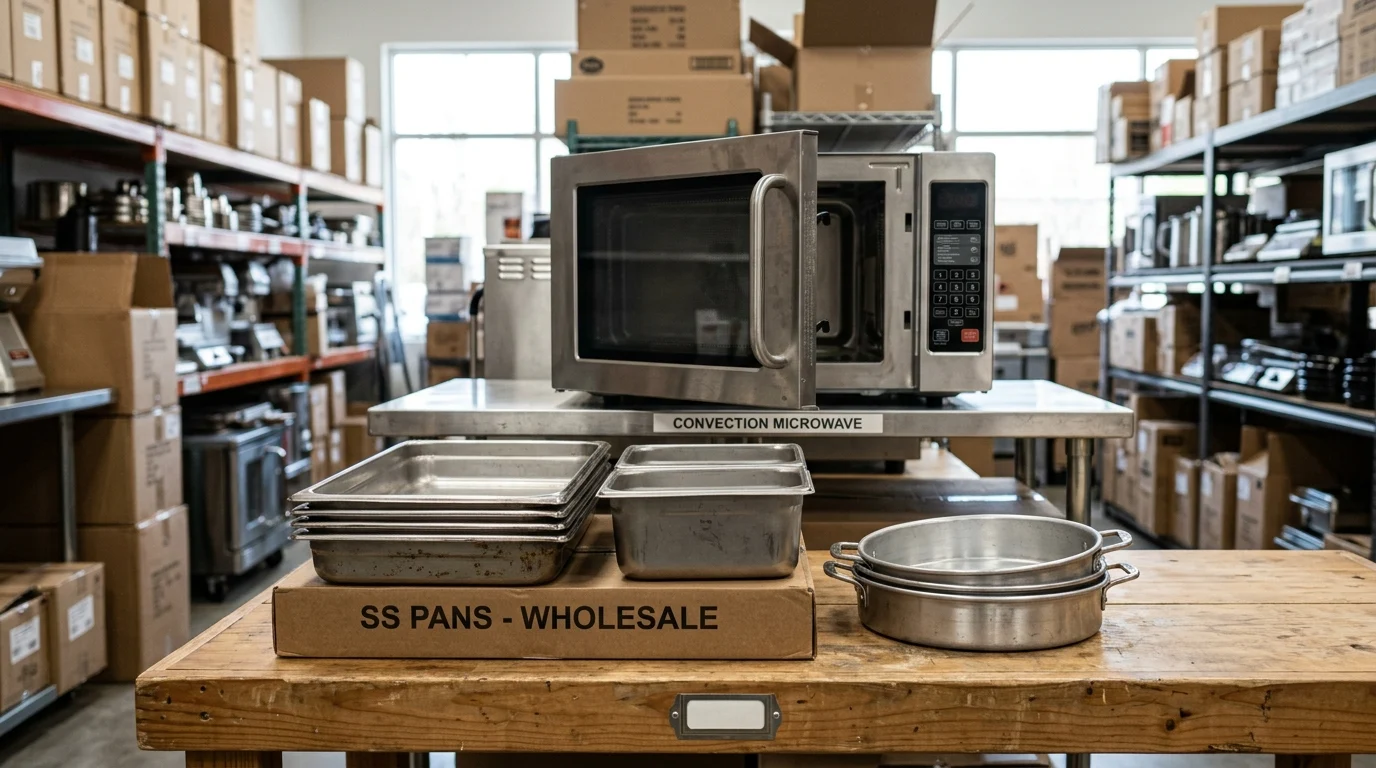

For B2B buyers sourcing convection microwaves, metal pan compatibility is not a minor feature. It affects product positioning, return rates, and channel risk.
Impact on positioning, returns, and channel risk
Misrepresenting or omitting metal pan compatibility in product listings creates avoidable downstream cost. Buyers who receive units incompatible with standard commercial cookware may face higher return rates and retailer chargebacks. Reverse logistics benchmarks from Optoro indicate feature-mismatch returns can reach 15–20% in appliance categories. Accurate specification documents at the sourcing stage help reduce this exposure.
Buyer segments that need clear usage guidance
The segments most exposed to compatibility confusion include:
- Foodservice equipment distributors supplying commercial kitchens where metal bakeware is common
- Hospitality procurement teams specifying countertop appliances for hotel or catering use
- E-commerce importers listing multiple SKUs with different cavity materials
Each segment needs clear factory confirmation on whether convection mode supports metal pans and under which operating conditions.
Common importer and distributor mistakes
Frequent sourcing errors include:
- Assuming all convection microwaves support metal pans; they do not when microwave mode operates simultaneously
- Failing to request cavity material specifications, such as stainless steel versus painted steel interiors
- Omitting mode-based usage restrictions from product data sheets sent to retail buyers
When Metal Pans Can Be Used in a Convection Microwave
Mode differences: convection, microwave, and combination
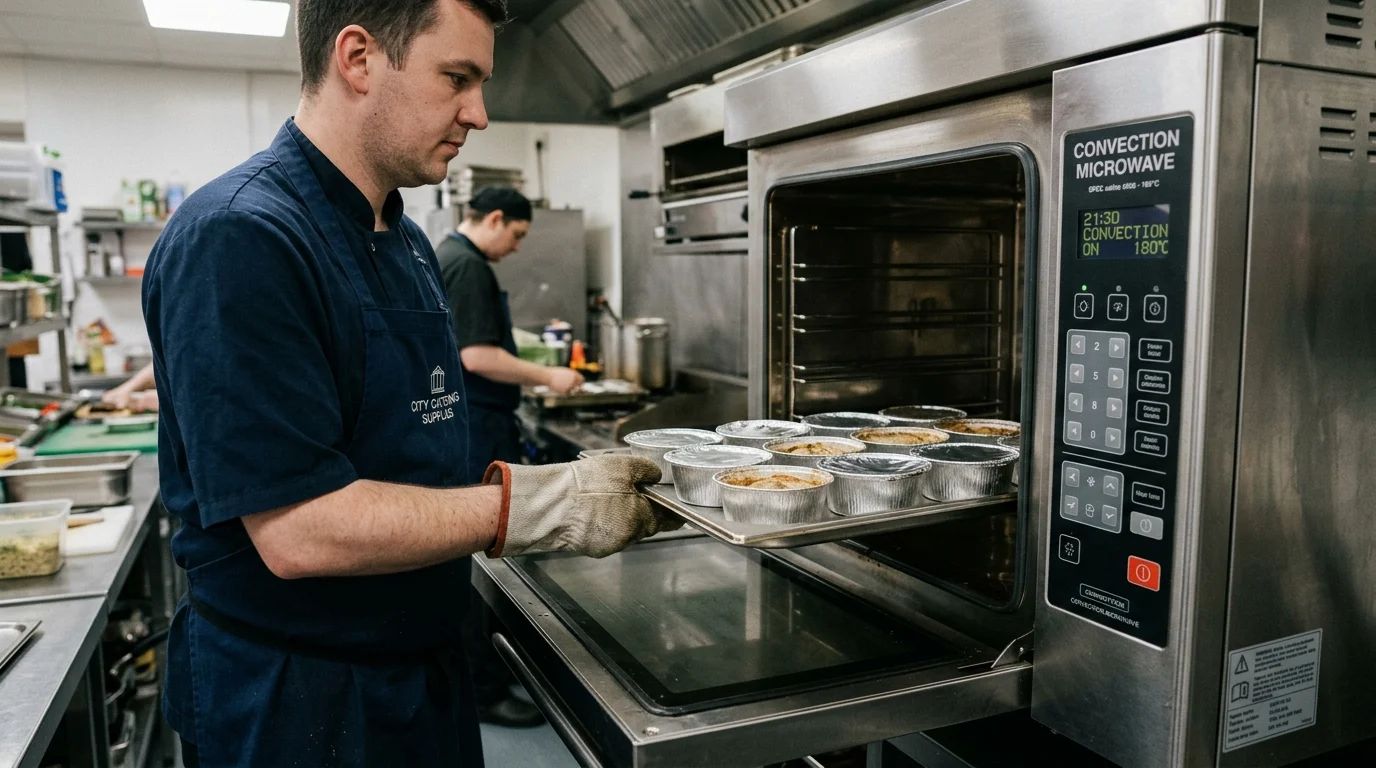
A convection microwave has three operating modes. In convection mode, it works like a conventional oven, using hot air and a heating element; metal pans are generally compatible. In microwave-only mode, metal should not be used because it can reflect microwaves and cause arcing or equipment damage. In combination mode, metal use depends on the manufacturer’s instructions and the pan’s shape and construction.
Allowed, restricted, and prohibited pan types
| Category | Examples | Compatibility |
|---|---|---|
| Allowed | Stainless steel baking pans, aluminum sheet pans | Convection mode only |
| Restricted | Dark anodized pans, pans with plastic handles | Check OEM specifications |
| Prohibited | Pans with metallic trim or coatings, foil containers | Not for microwave-only mode |
For bundled cookware programs, procurement teams should verify appliance and accessory documentation against applicable OEM safety requirements.
Usage limits for manuals, packaging, and sales sheets
Product documentation should state mode-specific restrictions clearly:
- User manuals: Include metal-use guidance by operating mode
- Packaging: Show warnings against metal use in microwave-only mode
- Sales sheets: Identify supported appliance types and approved operating modes
Technical Specs to Review Before Making Compatibility Claims
Before making compatibility claims, procurement teams should gather unit-level specifications across four categories.
Cavity, rack, turntable, and airflow design factors
Evaluate internal cavity dimensions, rack positions, turntable diameter and load rating, and fan placement. Units with bottom-mounted fans typically require tighter pan clearance than rear-fan models. Confirm whether racks are fixed or adjustable.
Pan material, shape, coating, and size effects
Anodized aluminum, stainless steel, and carbon steel respond differently to convection heat cycles. Dark coatings absorb more energy and may increase browning near cavity walls. Rectangular pans in cylindrical cavities can restrict airflow and may increase arcing risk if edges are too close to high-field areas.
Required comparison data for dimensions and clearance
Collect manufacturer-published minimum clearance requirements, often 1–2 inches on all sides, and compare them with pan footprint, height, and handle protrusion. Request cavity schematics rather than relying only on marketing dimensions.
Lab tests and validation data to request
Request supplier documentation for IEC 60335-2-25 testing related to metallic accessory use, thermal performance data, and any UL or ETL certification covering accessory compatibility. For distributor-level compatibility claims, use third-party validation rather than internal QC summaries.
How to Evaluate Suppliers and Accessory Programs
When sourcing convection microwave accessories at scale, evaluate suppliers on technical compliance, program fit, and support, not price alone.
OEM and ODM Questions on Trays, Racks, and Pan Sets
Confirm whether trays and racks are rated for combined microwave-convection cycles, not convection-only use. Request material certifications, such as food-grade 430 stainless steel or anodized aluminum, and test reports for shielding geometry compliance. Clarify OEM versus ODM scope early to align specifications, lead times, and unit costs.
MOQ, Tooling, Private Label, and After-Sales Support
- MOQ: Typical factory minimums are 500–1,000 units per SKU for pan sets; custom rack programs may require 2,000+ units.
- Tooling: New tray molds often range from USD 1,500–5,000; assess cost against annual volume.
- Private label: Confirm branding options, carton marking, and artwork approval process.
- After-sales: Verify warranty replacement ratios and spare-part availability before launch.
Packaging, Manuals, and Warning Label Requirements
Retail packaging should include multilingual safety warnings, especially that non-approved metal must not be used in microwave-only mode. For EU and US markets, manuals should reference IEC 60335-2-25 where applicable. Ask suppliers for editable label and manual templates so localized updates can be made without changing packaging tooling.
Compliance, Safety, and Liability Requirements
Applicable certifications and food-contact rules
Metal pans for convection microwave use must meet food-contact material requirements. In the U.S., relevant guidance includes FDA 21 CFR; in the EU, Regulation (EC) No 1935/2004 applies to materials in contact with food. Aluminum and stainless steel pans should be supported by documentation covering alloy composition, surface treatment suitability, and migration limits where required.
Manual review to reduce misuse and warranty claims
Procurement teams should require suppliers to state clearly whether each pan SKU is approved for convection-only cycles or for microwave-plus-convection combination modes. Missing or unclear use-case declarations increase warranty risk and operator liability.
Recommended checks:
- Confirm the rated temperature range, typically 230–260 °C for commercial convection
- Verify that packaging does not make unsupported microwave-safe claims
- Request supplier indemnification terms covering misuse-related claims
Testing files, conformity records, and traceability
Importers should request a technical file that includes:
- Material composition certificates for metal alloys
- Third-party test reports from accredited labs such as SGS, Intertek, or Bureau Veritas
- A Declaration of Conformity for the destination market
- Batch traceability codes linking production lots to test records
These records support customs clearance, retailer audits, and recall readiness.
Logistics, Packaging, and Cost Considerations
Procurement teams sourcing convection microwave bundles must account for packaging geometry, unit economics, and supply-chain risk simultaneously.
Accessory packing and carton efficiency
Metal pans, racks, and turntable trays add dimensional weight and affect carton utilization. A standard 25 L convection microwave typically ships in a master carton of about 55 × 48 × 38 cm; nesting flat metal pans inside the cavity before boxing is a common factory practice that reduces void fill and keeps CBM per unit below 0.12 m³. Confirm whether accessories are packed inside the appliance or bagged separately, as separate packing increases DC pick-and-pack labor.
Key cost drivers across models and bundles
- Metal pan material: Aluminized steel pans usually cost 15–30% less than 430-grade stainless steel but may carry higher corrosion-return risk in humid markets.
- MOQ thresholds: Many OEM factories set 500–1,000 units minimum for custom-branded bundles with metal accessories.
- Certification surcharges: Expanding UL or CE scope to metal cookware components can add USD 800–1,500 per SKU in testing fees.
Balancing landed cost, damage rate, and margins
Damage rates on metal pans typically average 1–3% in sea freight when double-walled corrugated is used. Factor this into target landed cost, along with a 6–8% buffer for port surcharges and last-mile handling, to protect distributor margins.
How to Communicate Metal Pan Compatibility Across Channels
Consistent messaging across sales channels reduces confusion and returns related to misuse of metal pans in convection microwave units.
Claim formats for catalogs, listings, and packaging
Use one standardized compatibility statement across formats:
- Catalog/spec sheet: “Compatible with convection and combination modes; not approved for microwave-only cycles.”
- Marketplace listing: “Convection Mode: ✓ | Microwave-Only Mode: ✗”
- Packaging: Use IEC 60417-compliant oven-safe icons and a crossed-out microwave symbol when microwave-only use is prohibited.
How to explain approved and prohibited use clearly
Avoid vague terms such as “microwave safe.” State approval by operating mode:
- Approved: convection mode; combination mode at manufacturer-rated wattage
- Prohibited: microwave-only mode due to arcing risk, equipment damage, and possible warranty invalidation
Reference the appliance OEM operator manual as the authoritative source in distributor documentation.
Training and rollout steps to reduce misuse and returns
- Train sales and customer service teams on mode-specific use before launch.
- Include a one-page compatibility reference card with each wholesale shipment.
- Track “incorrect mode” as a distinct return reason.
- Review return data quarterly and adjust claim language if misuse continues.
Buyer FAQs and Key Takeaways
Top sourcing, compliance, and claim-control priorities
Verify IEC 60335-2-90 or the applicable national equivalent before approving metal cookware for convection microwave use. Request mode-specific test reports rather than broad “oven-safe” declarations.
Whether stainless steel pans work in every mode
No. Stainless steel pans are suitable only for convection and combination-bake modes, not pure microwave mode. Require clear bilingual labeling on each SKU to reduce misuse and return claims.
Whether to bundle approved pans or source separately
Bundling convection-approved metal pans with the appliance can increase order value and reduce compatibility disputes. However, align MOQs carefully, as pan suppliers often require separate minimums, typically 500–1,000 units per SKU. Confirm carton specifications and weight limits with your freight forwarder before final approval.
Which documents to request before approving claims
Request these documents from suppliers before accepting post-sale claims:
- Mode-specific test reports covering convection cycle, rated wattage, and temperature range
- Material certificates for the stainless steel or aluminum alloy used
- Signed compliance declarations citing applicable standards
- Photographic evidence of labeling on production units
Complete documentation supports customs review and streamlines dispute resolution with retail and foodservice buyers.