
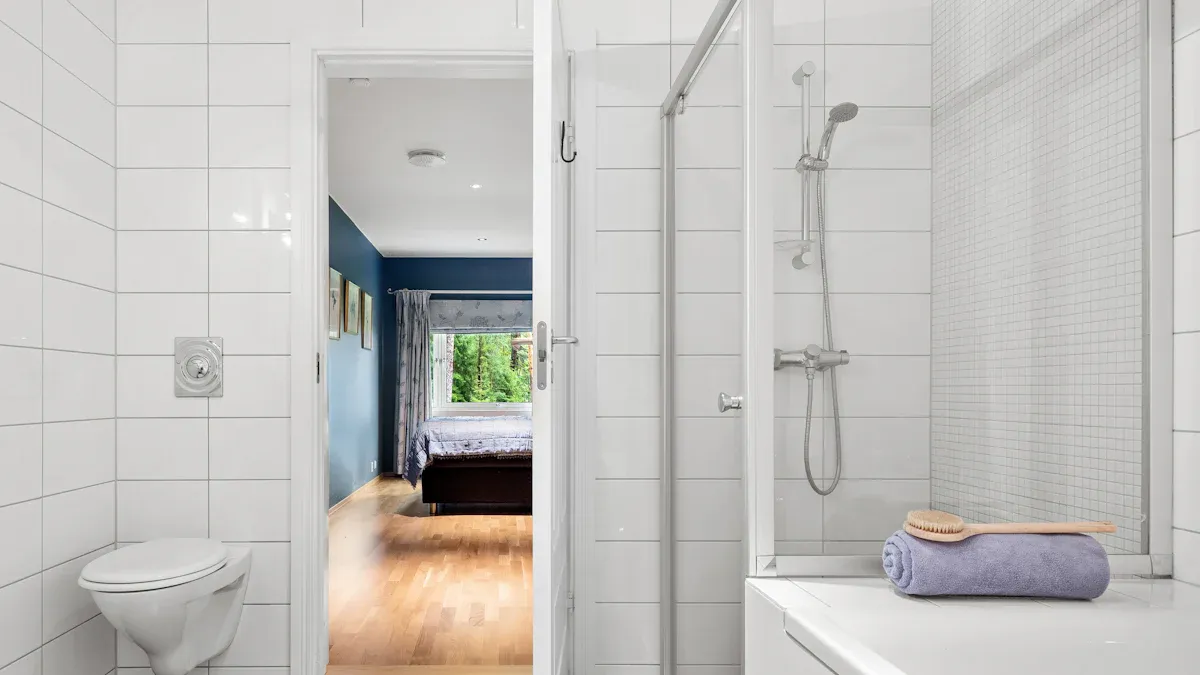
A shower room typically features only a walk-in shower, while a bathroom usually includes a bathtub and sometimes both. Knowing this difference guides homeowners in selecting options that fit their space, daily routines, and resale plans. Homeowners often weigh accessibility, cost, and family needs during renovation.
Key Takeaways
- Shower rooms feature only walk-in showers, saving space and improving accessibility, making them ideal for small homes or people with mobility challenges.
- Bathrooms include multiple fixtures like bathtubs, sinks, and toilets, offering flexibility for family needs and supporting various hygiene activities.
- Choosing between a shower room and bathroom depends on space, lifestyle, and budget; shower rooms are easier to clean and modern, while bathrooms provide comfort and higher home value.
Shower Room vs. Bathroom: Definitions
What is a Shower Room
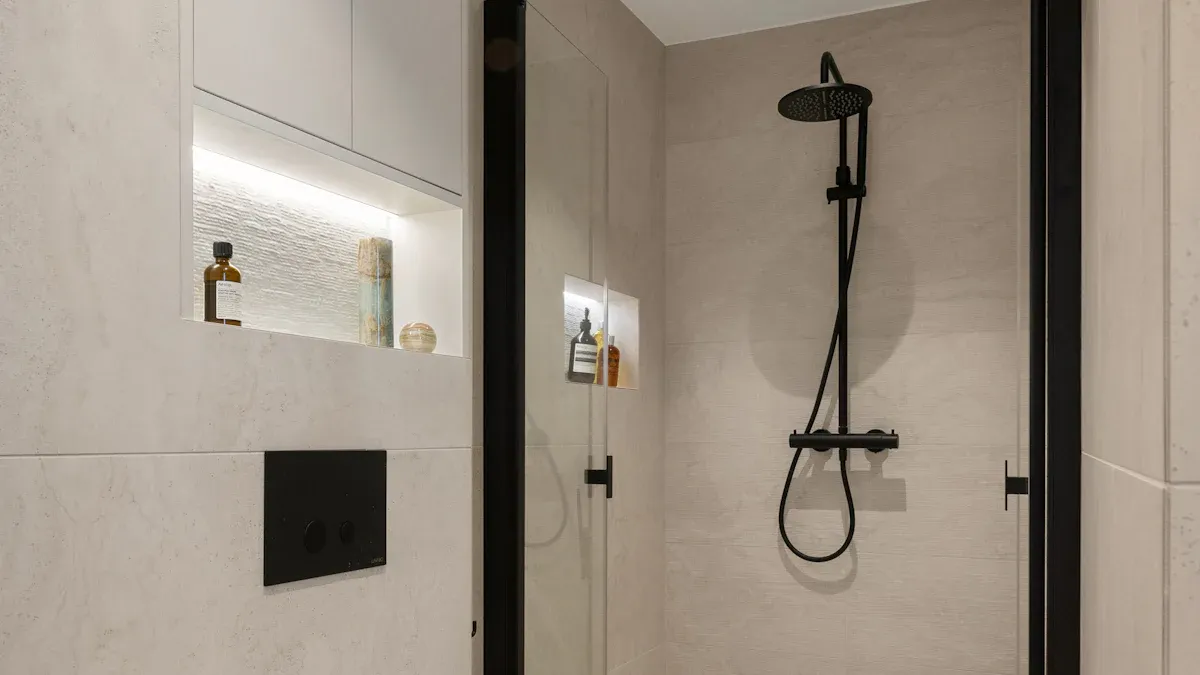
A shower room is a dedicated space designed for showering. It usually contains only a shower area, without a bathtub. Designers often create shower rooms with walk-in access, making them easy to enter and exit. Many shower rooms feature different types of showerheads, such as fixed, adjustable, or rain styles. Controls for water temperature and flow are placed for convenience, sometimes outside the shower area. Storage solutions like recessed niches and vertical cabinets help keep toiletries organized. Some shower rooms include benches or foot niches for comfort during shaving. The layout often maximizes available space, using vertical panels and glass partitions to create an open feel. Modern shower rooms may offer smart systems for precise temperature control and programmable settings. Materials like recycled glass tiles, bamboo, and natural stone provide durability and eco-friendly options. Designers also consider plumbing compatibility, ventilation, and moisture control to ensure safety and comfort.
Tip: Homeowners can choose a shower room for smaller spaces or for improved accessibility. Curbless entries and wide doors make these rooms suitable for people with mobility challenges.
What is a Bathroom
A bathroom is a room that meets strict safety, functionality, and accessibility standards set by building codes and design guidelines. Residential codes require features such as minimum door widths, proper plumbing, electrical safety, and ventilation. The National Kitchen and Bath Association (NKBA) recommends best practices for fixture placement and clearances to improve usability. Bathrooms must have waterproofing measures, such as shower pans and wall membranes, to prevent water damage. Accessibility features, inspired by the Americans with Disabilities Act (ADA), include grab bars, wide doorways, and adjustable fixtures. Bathrooms often contain a combination of fixtures, such as a toilet, sink, shower, and bathtub. The design focuses on creating a safe, user-friendly environment for all family members.
| Bathroom Element | IRC (Building Code) Requirements | NKBA (Design Guidelines) Recommendations |
|---|---|---|
| Door Width | No minimum size specified | Minimum 32" clear width; typically 36" door recommended; ADA requires 34" clear opening |
| Door Interference | No specific requirements | Door should not interfere with shower or cabinet doors; outward swing recommended in small spaces |
| Ceiling Height | Minimum 80" in front of fixtures and shower head area | No additional recommendations; 60" recommended over sinks for comfort |
| Clear Floor Space | Minimum 21" between toilet/sink and opposite wall/fixture; 24" in front of shower entry | Recommended 30" for comfort, though 21" or 24" may be acceptable in small bathrooms |
| Sink Spacing | Minimum 15" from sink centerline to wall; 4" clearance at sink edge | Recommended 20" from sink centerline to wall for comfort |
| Distance Between Sinks | Minimum 30" between centerlines | Recommended 36" between centerlines for user comfort |
| Vanity Height | No code requirement | N/A |
Bathrooms must follow these standards to ensure safety and comfort. Designers use these guidelines to create spaces that work well for daily routines and meet legal requirements.
Shower Room and Bathroom: Key Features
Layout and Space
Homeowners notice clear differences in the layout and space of shower rooms and bathrooms. Shower rooms often use compact footprints, making them ideal for small homes or guest suites. Bathrooms, on the other hand, range from small half baths to large luxury spaces. The following tables show typical dimensions for both shower rooms and bathrooms in modern homes:
| Shower Type | Size Category | Typical Dimensions (inches) |
|---|---|---|
| Standard Showers | Small | 32 x 32 to 36 x 36 |
| Medium | 48 x 36 to 60 x 32 | |
| Large | Up to 72 x 36 | |
| Alcove Showers | Small | 60 x 32 |
| Medium | 60 x 36 | |
| Large | 48 x 36 | |
| Corner Showers | Small | 36 x 36 |
| Medium | 42 x 42 | |
| Large | 48 x 48 | |
| Shower-Tub Combos | Small | 54 x 30 x 15 |
| Medium | 60 x 32 x 17 | |
| Large | 72 x 36 x 19 | |
| Walk-in Showers | Minimum Size | 60 x 36 |
| Quadrant Showers | Small | 31 per side |
| Medium | 35-39 per side | |
| Large | 47+ per side |
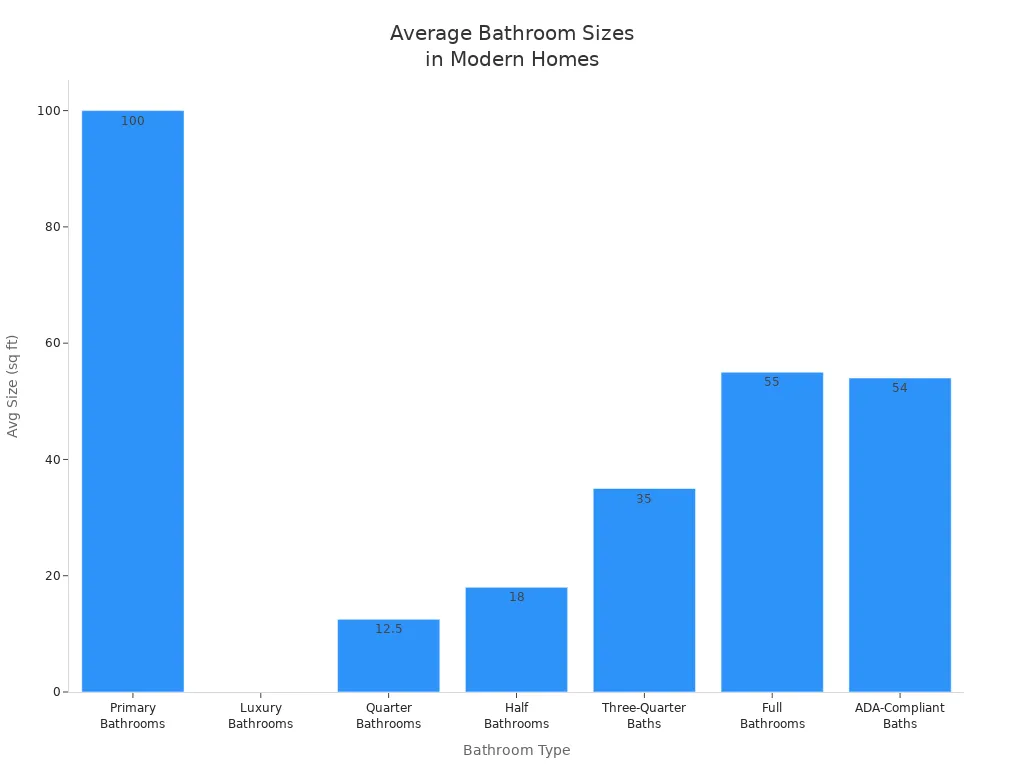
| Bathroom Type | Typical Size Range (sq ft) | Description/Features |
|---|---|---|
| Primary Bathrooms | 100+ | Double vanities, walk-in showers, tubs, toilets |
| Luxury Bathrooms | 200+ | Spa-like, multiple fixtures, seating |
| Quarter Bathrooms | 10-15 | One fixture, small space |
| Half Bathrooms | 12-24 | Toilet and sink |
| Three-Quarter Baths | 30-40 | Toilet, sink, shower or tub |
| Full Bathrooms | 40-70+ | Toilet, sink, shower, bathtub |
| ADA-Compliant Baths | 54+ | Accessibility features, wider space |
Fixtures and Fittings
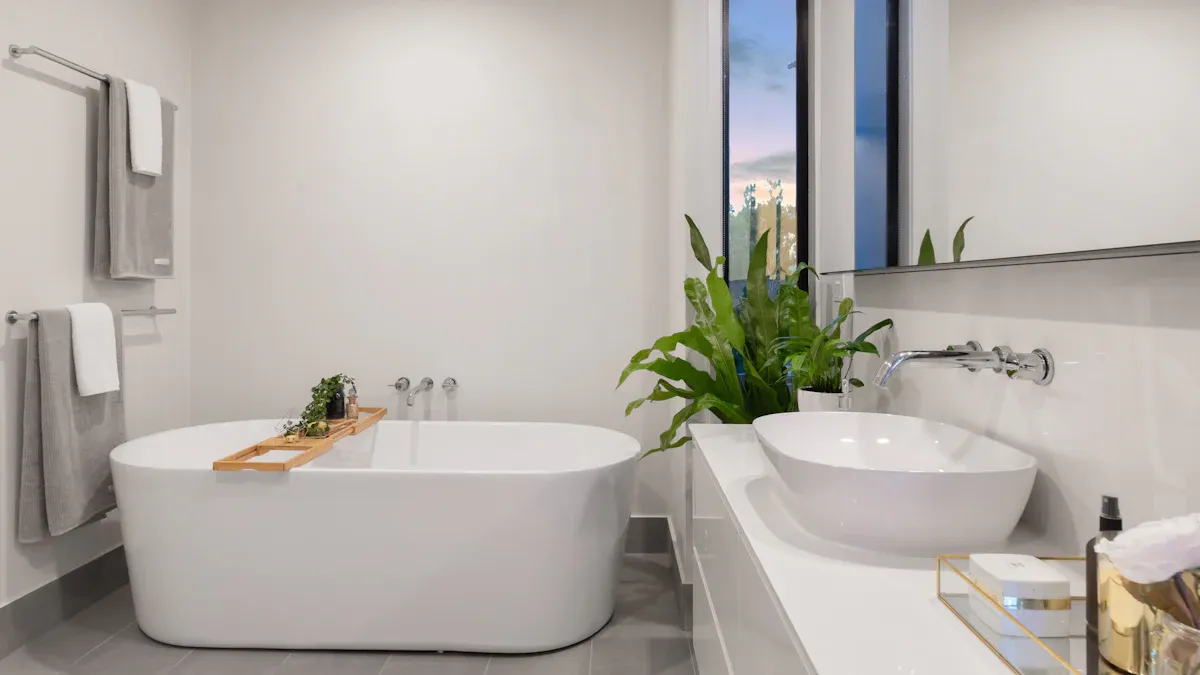
Shower rooms typically feature walk-in showers, glass panels, and water-resistant surfaces. Bathrooms include a wider range of fixtures, such as toilets, sinks, bathtubs, and sometimes bidets. Designers select fixtures based on user needs and available space. Accessories like towel bars, storage cabinets, and benches add convenience. Modern bathrooms may include double vanities, freestanding tubs, and advanced plumbing systems. Both spaces require proper waterproofing and ventilation to maintain safety and comfort.
Design and Style
Interior designers use a variety of styles to create inviting shower rooms and bathrooms. Popular trends include statement tiles, such as herringbone or marble, which add visual interest. High-tech features, like electronic controls and multiple showerheads, enhance comfort. Minimalist designs use clean lines and natural materials, creating a spa-like atmosphere. Terrazzo surfaces and trendy metals, such as copper or matte black, bring contemporary flair. Globally inspired elements, bold colors, and geometric patterns allow homeowners to personalize their spaces.
Tip: Choosing the right design style can transform a functional room into a relaxing retreat.
Main Differences Between Shower Room and Bathroom
Function and Use
The primary function of a bathroom is to serve as a comprehensive space for personal hygiene. People use bathrooms for showering, bathing, brushing teeth, shaving, and grooming. Bathrooms often include multiple fixtures, such as toilets, sinks, bathtubs, and showers, which allow several activities to happen at once. In family homes, bathrooms help manage daily routines by providing space for toileting, bathing, and grooming. Families often organize storage zones and set time limits for showers and baths to reduce congestion.
A shower room, on the other hand, focuses mainly on showering and personal relief. It usually separates the toilet from the shower area, which increases privacy and hygiene. This separation helps reduce the spread of bacteria and keeps the shower area cleaner. In homes with only one main bathroom, adding a shower room or an outdoor shower can ease congestion and provide a dedicated space for bathing. This setup allows family members to shower without waiting for the main bathroom to become available.
| Aspect | Bathroom Functions | Shower Room / Water Closet Functions |
|---|---|---|
| Primary Purpose | Comprehensive personal hygiene: showering, brushing teeth, shaving, washing | Personal relief: urination, defecation |
| Privacy | Shared space for multiple activities, less privacy | Enhanced privacy by separating toilet from other activities |
| Hygiene Considerations | Multiple fixtures, potential exposure to bacteria from toilet flushing | Separation reduces bacterial spread, protects hygiene of other areas |
| Fixtures and Plumbing | Wide range: shower heads, bathtubs, sinks, bidets, multiple valves and fittings | Limited: mainly toilet bowl, occasional sink, simple plumbing |
| User Priorities | Accommodates multiple hygiene activities simultaneously | Focus on privacy and hygiene, especially in shared bathroom settings |
| Typical Use Scenario | Freshening up, washing, grooming, showering | Using toilet with privacy and hygiene benefits |
Note: Bathrooms support many hygiene activities at once, while a shower room offers a focused, private space for showering and personal relief.
Accessibility and Privacy
Accessibility plays a key role in choosing between a bathroom and a shower room. Walk-in showers in shower rooms provide barrier-free entry, which helps people with limited mobility. These showers often include slip-resistant floors, fold-down benches, and adjustable shower controls. ADA-compliant designs offer roll-in showers for wheelchair users and transfer showers for those who need to move from a wheelchair to a seat. Curbless walk-in showers with wide openings make it easier for everyone to enter and exit safely.
Bathrooms require additional features to support accessibility. Grab bars, non-slip flooring, and proper lighting improve safety for all users. Walk-in bathtubs with low thresholds and built-in seats help people who need extra support. In public bathrooms, fixture placement and maintenance affect accessibility for people with mobility challenges.
Privacy features differ between shower rooms and bathrooms. Shower rooms often use frosted or privacy glass for doors and enclosures. This design keeps the space bright while protecting privacy. Bathrooms use a wider range of privacy solutions, such as frosted glass on windows, privacy walls, screens, and smart glass technology. Strategic layout planning separates the toilet and shower areas from the main door view, which helps multiple users feel comfortable. Modern bathrooms may use switchable glass for privacy on demand, especially in wet areas.
Tip: Frosted glass and smart layout choices can improve privacy in both shower rooms and bathrooms.
Space Efficiency
Space efficiency is a major difference between shower rooms and bathrooms, especially in small apartments. Shower rooms with walk-in showers take up less space than traditional bathrooms with bathtubs. Frameless glass partitions and curbless designs make the floor area look larger and more open. Floating vanities, wall-mounted toilets, and pocket doors save valuable floor space and improve movement within the room. Built-in shelves and overhead storage keep the area organized without adding clutter.
Bathrooms with bathtubs require more square footage. Standard fixtures and swinging doors take up more space, which can make small bathrooms feel crowded. Bulkier storage options may reduce usable floor area. Bathtubs and shower curtains create visual barriers, while walk-in showers offer a modern, open look.
| Feature/Design Element | Shower Rooms (Walk-In Showers) | Traditional Bathrooms (with Bathtubs) |
|---|---|---|
| Space Usage | Takes up less space, visually expands floor area | Requires more square footage due to bathtub size |
| Fixtures | Floating vanities, wall-mounted toilets, pocket doors | Standard fixtures occupy more floor space |
| Storage Solutions | Built-in shelves, overhead storage, corner shelves | Bulkier storage options may reduce usable floor area |
| Door Design | Pocket or sliding doors save space | Traditional swinging doors consume valuable floor space |
| Visual Openness | Frameless glass and curbless showers create openness | Bathtubs and curtains create visual barriers |
| Accessibility | Curbless showers improve movement | Bathtubs can be less accessible |
| Multi-functionality | Can combine with laundry or other functions | Bathtubs limit multi-use space |
| Suitability for Small Apartments | Ideal for small apartments | Less ideal due to larger footprint |
Walk-in showers adapt to different room sizes and free up floor space. The typical size of a walk-in shower is about 60 inches by 30 inches, but smaller options exist for compact spaces. Building codes require at least 24 inches of clearance around the shower entry for safety. Bathrooms, especially those with bathtubs, need more space and may not fit well in small apartments.
Pros and Cons of Shower Room and Bathroom
Shower Room Advantages
Homeowners often choose a shower room for its many benefits. Walk-in showers are easy to clean because they have fewer corners and no curtains, which helps prevent mold and mildew. Many people find that a shower room increases property value, with bathroom remodels offering a strong return on investment. Eco-friendly options, such as low-flow showerheads, can reduce water use by more than half. Modern shower rooms can include smart controls for water temperature and lighting. The open design creates a modern, spa-like look and makes small spaces feel larger. Walk-in showers also improve accessibility for seniors or anyone with mobility challenges.
- Easy to clean and maintain
- Increases property value
- Eco-friendly and water-saving options
- Supports smart technology upgrades
- Modern, stylish appearance
- Better accessibility and safety
Tip: Custom design options let homeowners match the shower room to their personal style.
Shower Room Disadvantages
Despite the benefits, a shower room can have some drawbacks. Open or glass designs may offer less privacy. The space can feel colder because heat escapes more easily. Moisture can spread beyond the shower area, which increases the risk of mold if ventilation is poor. Installation often costs more and may require expert design to prevent water damage. Some buyers prefer homes with bathtubs, so removing all tubs could affect resale value.
- Less privacy due to open layouts
- Feels colder during use
- Higher risk of mold from extra moisture
- More expensive installation and materials
- Water splash can increase slip hazards
Bathroom Advantages
Bathrooms offer flexibility and comfort for families. They usually include a toilet, sink, shower, and bathtub, which allows several people to use the space for different needs. Bathtubs provide a place for relaxing baths or bathing children. Bathrooms can support both quick showers and long soaks. Good storage and layout options help keep the space organized. Many buyers look for homes with full bathrooms, which can boost resale value.
- Multiple fixtures for different needs
- Bathtubs for relaxation and family use
- Flexible for quick or long routines
- Good storage and organization options
- Increases home appeal for buyers
Bathroom Disadvantages
Bathrooms with many fixtures need more space, which can make small homes feel crowded. Bathtubs use more water than showers, which may increase utility costs. Cleaning can take longer because of more surfaces and corners. Older bathrooms may lack modern features or accessibility options. Remodeling a full bathroom often costs more and takes longer than updating a shower room.
- Requires more space
- Higher water use with bathtubs
- More surfaces to clean
- May lack modern or accessible features
- Remodeling can be costly and time-consuming
Choosing Between Shower Room and Bathroom
Space and Layout Considerations
Architects recommend that available space strongly influences the decision between a compact shower area and a full bathroom. In small homes, walk-in showers, glass walls, and doorless designs help maximize both visual and physical space. Wet room concepts, which remove barriers, create a seamless and open environment. Designers often use light color schemes and built-in storage to keep the area uncluttered. In larger homes, bathrooms can include both a shower and a bathtub, sometimes with separate zones for privacy and comfort. Proper planning ensures that fixtures fit close to existing plumbing, reducing costs and risks. Safety features like grab bars and non-slip flooring are essential, especially in spaces used by older adults or children.
Note: Good ventilation and lighting improve comfort and prevent moisture problems.
Lifestyle and Needs
Household routines and user needs play a key role in choosing the right layout. Families with young children often prefer bathtubs for easy bathing. Older adults or people with mobility challenges benefit from walk-in showers with grab bars and curbless entries. Busy professionals may choose quick, efficient shower setups, while those who value relaxation might want a deep soaking tub. The table below shows how different factors affect preferences:
| Factor | Shower Preference | Bathtub Preference | Combo Unit Preference |
|---|---|---|---|
| Space Availability | Best for small spaces | Needs more room | Space-efficient |
| Household Composition | Good for older adults | Ideal for families | Suits mixed needs |
| Daily Routine | Fast and efficient | Relaxation-focused | Versatile |
| Accessibility | High | Lower | Moderate |
| Water Usage | Low | High | Balanced |
| Home Value Impact | Neutral | Can increase value | Adds versatility |
Cost and Installation
Installation costs vary based on the type of setup and the complexity of the project. Walk-in showers typically cost between $1,150 and $8,000. Tub-shower combos range from $1,500 to $8,500. Steam showers and accessibility-focused designs can reach up to $8,600. Labor for shower installation usually falls between $400 and $2,000. Adding a full bathroom, which includes both a shower and a bathtub, averages around $22,000. Homeowners should also consider ongoing maintenance and potential upgrades when planning their budget.
Tip: Keeping fixtures close to existing plumbing lines helps control installation costs.
Experts highlight several differences between shower rooms and bathrooms.
- Shower stalls offer compact, cost-effective solutions, while walk-in showers create a modern, spa-like atmosphere.
- Bathrooms include additional fixtures, such as bathtubs, and support varied routines.
- Homeowners should assess space, choose durable materials, and match features to personal needs.
Most homeowners report increased satisfaction after remodeling these spaces.
FAQ
What is the main difference between a shower room and a bathroom?
A shower room contains only a shower. A bathroom includes a shower, bathtub, toilet, and sink. Each space serves different hygiene needs.
Can a shower room increase home value?
Many buyers prefer modern shower rooms. They offer easy cleaning and accessibility. Real estate agents often highlight updated shower rooms in property listings.
Which option is better for small apartments?
Shower rooms fit small spaces well. They use less floor area and create an open look. Bathrooms with bathtubs need more room.